
If you manage rental properties in Massachusetts, news of the recent $500,000 settlement between Attorney General Andrea Joy Campbell and Boston-based Green Ocean Property Management, LLC should be a clear wake-up call.
While large property management firms often make headlines, the enforcement push behind this enforcement action directly impacts every independent property owner across the Commonwealth. Here is a breakdown of what went down, the specific practices targeted, and how small landlords can protect their investments while staying fully compliant with state law.
What Triggered the Penalty?
The Attorney General’s Office (AGO) alleged that Green Ocean—which manages 377 units near local universities and medical centers—violated state consumer protection laws and regulations by charging prohibited administrative and renewal fees, including:
- Disguised Administrative Charges: $500 “new lease” fees, $250 “lease renewal” fees, and $250 fees to add a roommate.
- Mandatory “Resident Benefits Packages”: Monthly recurring charges for basic services that property owners are already legally required to provide (such as rent payment portals or emergency repair contacts).
- Improper Penalties: Charging both actual damages and liquidated damages for early lease terminations, as well as applying tenant payments to non-rent fees before rent.
- Excessive Lease Fines: Imposing harsh daily fines for unauthorized pets, overstaying a lease, or attempting to contact the property’s actual owner.
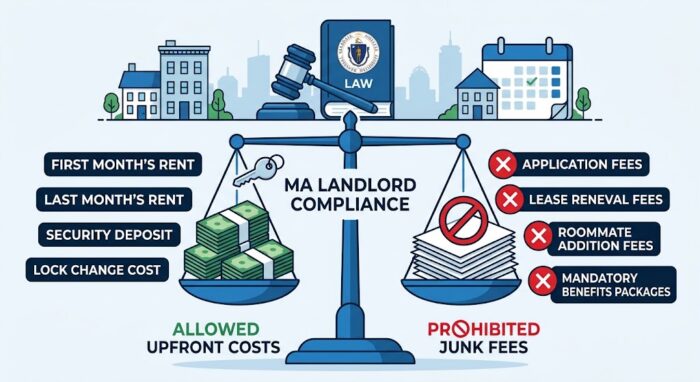
The Upfront Fee Rule: What Landlords Can and Cannot Charge
Landlords and property managers are strictly limited in what can be collected prior to or at the start of a tenancy.
You MAY ONLY collect:
- First month’s rent
- Last month’s rent
- A security deposit (up to one month’s rent, held in a separate interest-bearing account)
- The actual cost of changing a lock or key lock set
You CANNOT charge:
- Application or credit check fees
- Lease preparation or drafting fees
- Move-in, renewal, or roommate change fees
- Mandatory monthly packages for standard landlord obligations
Key Takeaways to Protect Your Rental Business
Navigating Massachusetts landlord-tenant law requires strict adherence to statutory limits. To avoid unnecessary legal risk:
- Audit Your Fee Structure: Eliminate any administrative, processing, or lease modification fees. Build legitimate operating overhead directly into base rent rather than tacking on separate charges.
- Review Lease Payment Rules: Avoid clauses that automatically apply rental payments to outstanding fines or late fees before rent. Doing so can render subsequent late rent fees illegal.
- Streamline Lease Terms: Ensure penalty clauses (such as pet fees or lease-break terms) reflect reasonable, actual damages rather than punitive daily rates.
- Consult Updated Resources: Review the state’s updated to verify that your rental agreements comply with recent housing legislation.