
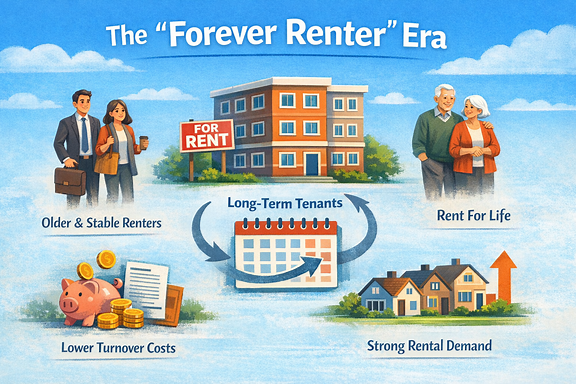
More Americans are renting longer than ever before, and many are becoming lifelong renters. With homeownership increasingly out of reach for a large portion of the population, the rental market is shifting in ways that directly affect landlords. Understanding these changes can help property owners plan more effectively and make smarter long‑term decisions.
Homeownership has become harder to achieve due to rising prices, limited inventory, and economic pressures. As a result, many renters who once expected to buy a home eventually are now staying in the rental market indefinitely. This creates a larger and more stable pool of long‑term tenants.
Today’s renter is also older and more settled than the stereotype suggests. The renter population now includes mid‑career professionals, families seeking stability, and older adults who prefer the convenience of renting over the responsibilities of owning a home. These groups tend to stay longer, pay reliably, and value consistency, which can be a major advantage for landlords.
Longer tenancies translate into lower turnover costs. Every move‑out requires cleaning, repairs, advertising, and time without rent. When tenants stay for several years instead of one, landlords save money and enjoy more predictable income. Reduced turnover is one of the most significant financial benefits of the “forever renter” trend.
This shift also strengthens the long‑term outlook for rental housing. If renting becomes a lifelong norm for more households, demand for well‑maintained rental units will remain strong. Landlords who invest in their properties and provide a good living experience are likely to see stable occupancy and steady rent growth over time.
The “forever renter” era represents a structural change, not a temporary trend. For landlords, it offers a more stable tenant base, fewer turnovers, and stronger long‑term demand. Those who adapt to the needs of long‑term renters and maintain quality housing will be well positioned to benefit from this new reality.